Friday, November 11, 2011

Waiting...Extreme Waiting

Recently I've heard lots of talk about something authors are all too familiar with: waiting.

In the old days (at least this is how I imagine things) an author working in a solitary aerie would pound the keys until completing a masterful tome, and three days after mailing a box of loose pages to Major New York Publisher, the MNYP editor would call with great news: "This is a best seller! It'll be out for the holidays!"

Today, we write for a year, maybe two; we share with our critique partners; we revise; we send to our agent; we wait; we hear from agent and revise again; we wait; we hear that agent has received "no's"; we wait; we hear from an interested editor; we revise for editor; we wait; the book goes to committee; we wait; the book sells; we wait; we revise; the book's launch is bumped; we wait....well, that's the idea. And that's if you're lucky enough to have an agent who eventually sells your book.

Recently Steve Mooser of SCBWI crafted an excellent editorial in the Newsletter asking editors to be mindful that the new policy of "if you don't hear from us in 3 months, we aren't interested" is, well, cruel. That policy is hard on authors who sit on pins and needles, waiting, hoping. What happens after 3 months? How should an author feel? It's disheartening and enervating. I agree with Steve, though I don't know that this policy will go away any time soon.

So I've learned to think of this in a new way. Personally, I don't wait well (part of my anal control-freak nature). So I don't wait. I work.

The minute a manuscript goes out the door, in whatever direction, I begin or dive back into a new project. My own MO is to work on a very different type of project - say, moving from YA to MG or from historical to fantasy. I have to put the other work out of my mind, and in fact I look upon the waiting as a gift. A gift of time to start something new, to be creative, to read things I wouldn't read otherwise, to go back to my pile of craft books for new inspiration, to meet with colleagues, to catch up on publishing trends, to improve my craft.

I propose a new author game. Let's call it Extreme Waiting. Extreme Waiting is energetic and thrilling, rather than tedious. Extreme Waiting is a time of growth, development, renewal.

What do you say? I'll meet you on the keystroke. Let's go for the gold!

Tuesday, October 25, 2011

Galaxy Games: Greg Fishbone on Books for Boys


Greg Fishbone has written a fun, funny middle grade - Galaxy Games - that will appeal to young teen boys, especially boys who aren't ordinarily drawn to reading. As part of his blog tour I was delighted when he offered to write the following post on "books for boys."
Greg is also running a contest as part of his blog tour and here's today's clue:
Puzzle Piece #25 is here:


Books for Boys: What Keeps Them Reading?
I was in a classroom recently where reading-time was used as a reward for students who finished their other work. It was easy to tell which students were the readers in the class: boys and girls who raced through their work for a chance to spend a few extra minutes engaged with a book. A solid majority of the class seemed indifferent and probably would not have been reading if computer activities had been an option instead. Then there were those students who lingered over math assignments so they wouldn't have to crack open a novel; who chose the books from the classroom library with the highest ratio of pictures to words; who acted silly instead of reading; who subverted the process by picking the Guinness Book of World Records instead of a book with a narrative and plot.
These were the reluctant readers and in this particular classroom, they were all boys.
What does it take to engage reluctant readers? Thin books with cartoony cover art. Books with interior illustrations, especially graphic novels. Content that seems subversive. Humor. Science fiction. Sports. Books that tie into Star Wars, superheroes, video games, or other media. Books with boys as main characters. Short chapters. These books will get the boys reading, but I believe there is also a strong need for transitional books that are more challenging and literary while retaining the fun and accessible qualities that reluctant readers enjoy. To keep the boys reading, we need to up the ante.
We need books that continue to appeal to reluctant readers as they gain confidence and become less-reluctant readers. We need books that transition formerly-reluctant readers into almost-enthusiastic readers. We need books that will make today's reluctant readers into parents who model pleasure reading for their own children. 
Getting reluctant readers into books today is a good start, but turning them into life-long readers should be the overriding goal.


Greg R. Fishbone, Author - gfishbone.com - Twitter @tem2
The Challengers - Book #1 in the Galaxy Games Series
Follow the Galaxy Games Blog Tour, all October long!

Friday, October 21, 2011

Debut Authors of the Class of 2k11: Kiki Hamilton

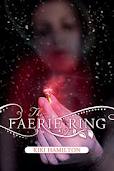
I'm delighted to be able to bring you another interview with one of the incredibly talented members of the Class of 2k11, Kiki Hamilton. Her debut novel, THE FAERIE RING, is exactly the kind of book I would curl up to read as a girl. Part fantasy, part historical, and (and this is the best part) part of a series! So, go ahead and fall in love!

And when you see some of Kiki's other upcoming work, why, I'm betting we'll be hearing lots about this gal.

Congratulations on the publication of your novel, THE FAERIE RING. Can you tell us a bit about the story and what inspired it?
           
Thank you so much!  I’m so excited for THE FAERIE RING to release on September 8th, 2011!
I’ve always loved the idea of things not being what they seem. That other dimensions or worlds exist side by side with our own, just beyond our ken; that the scope of our world is more than just the three dimensions that we are able to easily comprehend.  At the same time, I’m intrigued by the past, by our history, by what may have occurred that might not have been formally documented for future generations.  The untold story, if you will.  And I am particularly fascinated with those untold stories that have a thread of documented fact woven through them, which makes the reader question whether they are reading fiction or nonfiction.  A story that makes the reader say..”what if?”
The idea for THE FAERIE RING started with Tiki, an orphan, who survives on the streets of Victorian London as a pickpocket. I knew I wanted to write a story about a girl pickpocket because so often, girls / women have been cast as the weaker sex in books and movies and yet in my experience, women are often the brains and backbone behind the scenes.  Victorian London is a mysterious and magical time in history.  It is an era of great change, great technological advances, yet at the same time, beliefs in the occult remained strong.  Additionally, the era offers a startling dichotomy between the classes and the way people lived, providing a great gap of motivations.
So, I had a pickpocket who was clever yet sensitive and a mysterious time in history.  After Tiki stole the Queen’s ring, the next question I asked myself was:  What if someone else wanted the ring? What if there was something unseen happening in London at the same time?  So Tiki told me what happened next.
I wrote the first draft of THE FAERIE RING in thirty days.
How long have you been writing for children/teens? Have you written other books or is this your first effort?

I have been writing seriously for about five years.  THE FAERIE RING was the second book I wrote.  Since, I have written several others – see my answer below.

Can you describe your path to the publication of THE FAERIE RING?

My road to getting published was pretty typical. After writing, revising (and revising) my first book, I queried several agents.  While I waited, I wrote another book – THE FAERIE RING.  My agent asked for revisions on the first book so when I sent that back I mentioned TFR and she said to send that as well.  She signed me for both books but went out with THE FAERIE RING first, which sold to Susan Chang of Tor Teen.

Do you have any advice for beginning writers?

My advice is to never give up.  It takes HARD work to write a book.  One of the sayings pasted to my computer is this: 

“A river cuts through rock, not because of its power, but because of its persistence.”

The same is true of writing.  Take classes, read books on craft, read books that you love and think about why you love them. And write and write. Get critiques and don’t be afraid to revise.  The work is often in the revision.  You can do it. Never give up. 

Can you tell us something about your personal life – inspirations, plans for the future, goals, etc.?

I’d love to do more traveling.  I got to go to London for the first time in my life AFTER I’d written THE FAERIE RING. I fell in love with that city!  And it was totally surreal to walk in Tiki’s (the main character of TFR) footsteps from Charing Cross to St. James Park to Buckingham Palace.  I want to go back there and to Ireland.  I have another book that has parts set in Paris, so I’d like to go back there, as well.  Also, I have lots of ideas for more books so I’d love to be able to have the time to write them all!

Do you have any new writing ventures underway?

As a matter of fact – I have several.  I have already written the second book (THE TORN WING) in THE FAERIE RING series and I’m over halfway through the third book (THE TARA STONE).  Also, I’ve written a YA contemporary novel with a hint of paranormal entitled PULSE.  After I finish THE TARA STONE I’m going finish a YA Steampunk Fantasy called ENIGMA which is set in London in 1895.  No rest for the wicked, you know. ;-)

Do you have a website where readers can learn more about THE FAERIE RING

Yes! Please visit my blog at www.kikihamilton.blogspot.com which also has links to my website along with a map of London 1871. I’d love to hear from  you and your readers!

Janet, thanks so much for having me!

Sunday, October 16, 2011

Mistress of the Craft: Martha Alderson, "The Plot Whisperer"

One of the things I've struggled with the most throughout my writing career is plot. How could I create a novel that is both compelling and perfectly paced, without plot holes or draggy moments?


When, years ago, I discovered Martha Alderson, aka "The Plot Whisperer," I found answers. This is especially true since I am what she calls a "seat of the pants" writer. I've purchased her books and DVDs and used them over and over. And check out her blog - she has fantastic tips there, and you can sign up for her newsletter.


I was truly delighted when Martha contacted me to host her on the eve of the launch of her latest book on this confounding subject: THE PLOT WHISPERER: Secrets of Story Structure Any Writer Can Master (Adams Media, a division of F+W Media; October 18, 2011). Martha agreed to write a guest post on the revision process (another constant struggle, and trust me, I'm going to take the advice she gives below), and I'm thrilled to bring it to you.


Congratulations. You have written the first draft of your story. Before you embark on your first major rewrite, first take time to re-“vision” the overall project.


The first draft of a writing project is the generative phase. Rather than become dismayed when you are faced with a manuscript full of holes and missteps, even confusion and chaos, accept that this is part of the process.


Your first draft is a fragile thread of a dream. You know what you want to convey—well, maybe. Few writers adequately communicate a complete vision in the first draft of a story, especially when writing by the seat of your pants.


Without reading your story from beginning to end, for now simply create a list of scenes or chapters. Then, make a new plot planner by locating and filling in the four energetic markers—the end of the beginning, the halfway point, the crisis, and the climax. This allows you to analyze your story from a plot and structural level without becoming seduced by the actual words themselves.


1. Assign different colored sticky notes for the protagonist and one or two major characters. Give all the other characters the same color. Link the protagonist’s emotional chronology from scene to scene.
2. Sticky notes of one color follow the energetic intensity in the dramatic action in every scene, above or below the line. Place scenes that hold tension above the line. Put scenes with no conflict below the line.
3. Now, stand back from the plot planner and evaluate how many scenes fall above and below the line, and where. Consider how the rising and falling energy influences the pace of the story.
4. Next, compare the beginning and the end of your story. How do they tie together? Do both the dramatic action plot and character emotional development plot coalesce at the end for more punch and impact? Does the beginning foreshadow this clash?
5. Draw a line connecting the scenes that are linked by cause and effect. To determine the coherence of the overall story and the linkage between scenes, use your plot planners as a cause-and effect vision board.


Once you have let your story rest for at least a few days, read your manuscript all the way through one time as a reader. Keep the next draft in the back of your mind. You may find you have completely zoned out about the character’s emotions in your zeal to create lots of zip and zing in the dramatic action, or in your passion to create a binding historical and/or political timeline. Notice when the dramatic action plot is physical and concrete.


Feel when the character emotional plot is emotional, sensuous, and human. Read for the sequence of the dramatic action and where, in the next draft, you’ll want to explore and discover the character’s emotional development in greater depth.


If, when you reread your manuscript, you find that you have neglected the dramatic action plot, create concrete goals in the next draft that incite the protagonist to action.


Investigate how the loss, betrayal, hurt, or abandonment in the protagonist’s backstory affects her as she moves from and reacts to one action scene after another. Watch for references and hints of themes, and when and how thematic elements of the plot are most accessible.


In the next read-through, make notes on the rough draft hard copy of scenes that need to be cleaned up, expanded, and deepened in their treatment of the characters, action, and theme.


You may find the first draft is wobbly and scenes ramble. The complete vision of your story was a bit hazy the first time through. The action was tangled. The protagonist comes off as bewildering. You have glossed over an energetic marker or two. Don’t panic—this is good. As a matter of fact, the worse the first draft, the better. Trying for perfection before you know what you are trying to convey commonly leads to procrastination.


As you did with the first draft, write this new draft as quickly as possible all the way to the end. Work out the really big issues first and forget about the details for now.


When you finish the next draft(s) and you are certain that the core dramatic action plot and character emotional development plot work and the “vision” of your story is clear, use the next rewrite to begin grafting on details.


Martha Alderson has worked with hundreds of writers in sold-out plot workshops, retreats, and plot consultations for more than fifteen years. Her clients include bestselling authors, New York editors, and Hollywood movie directors. She lives in Santa Cruz, CA. Follow her blog, workshopsvlog, or follow her on twitter and facebook.

Monday, October 3, 2011

Voices You Should Hear: Tami Lewis Brown


Kidlit writers are some of the nicest people on the planet. And one of my favorite people in the kidlit world is Tami Lewis Brown

Tami is not only sweet and generous, she's also talented. Her middle grade debut novel, The Map of Me, is outstanding - I predict that it will be read and loved and rewarded. Tami has written a wonderful blog post for me, and I'm proud to bring it to you.

Middle grade novels and their protagonists come in every flavor—Nancy Drew to Artemis Fowl to India Opal Buloni. Eight to twelve year olds want to be entertained with fun light reads, but kids who love to read also want to dive into a book that touches their budding emotional lives. They yearn to explore horizons beyond home and school and a serious middle grade novel can chart the way.

Eight to twelve-year-olds are fluent readers and the books written for them are windows into the great big outside world, perhaps offering them a taste before they explore that territory for themselves. Middle grade books offer entertainment—no nine-year-old will sit still for a boring book—but they can also serve up complex emotion and writing every bit as sophisticated as YA or even adult novels.

But even though every adult was once a middle grade reader, grown-ups in our country seems to suffer from some kind of adult onset reading amnesia. Many adults believe middle grade books are simplistic. Easy to read. Even easier to write.

No way.

Try one of these passages on for size:

I come from a family with a lot of dead people . . . (Daddy) say “It’s not how you die that makes the important impression, Comfort; it’s how you live. 
                                                            Debbie Wiles’ EACH LITTLE BIRD THAT SINGS

When Jamie saw him throw the baby, saw Van throw the little baby, saw Van throw his little sister Nin, when Jamie saw Van throw his baby sister Nin, then they moved.
                                                            Carolyn Coman’s WHAT JAMIE SAW

There is nothing lonelier than a cat who has been loved, at least for a while, and then abandoned on the side of the road.
                                                            Kathi Appelt’s THE UNDERNEATH

The stories these books tell and the writing these writers use to tell it are every bit as sophisticated as any novel for older readers. Actually they’re even better because these writers fully respect their readers, often exposing them to difficult concepts and well-chosen words for the first time. Great middle grade authors put me in the mind of butterfly hunters as they catch elusive ideas with nets spun of prose, trapping tough concepts just long enough for young readers to observe and understand truths.

I wrote about hard ideas in THE MAP OF ME—exploring tough subjects with images and language middle grade readers relate to. One of my favorite bits is when the protagonist Margie pulls on her disapproving father’s jacket, symbolically taking on his feelings.

The jacket smelled of clove aftershave and the bacon-cheddar biscuits Daddy slipped in his pocket mornings he worked opening at the store. A whiff of ink from an old ballpoint that leaked in the pocket, its oily stink left along with the mark. Old Gold Filters he’d borrowed off Al and smoked behind the World of Tires. What Momma didn’t know wouldn’t hurt her. Soft and sad had worked into the jacket’s old plaid lining, leftover from a thousand days on Daddy’s back. Time and space were grooved into the corduroy. I pulled the front closed, tighter than the zipper, but I still didn’t feel warm.

But is the story of a girl who thinks she can’t do anything right, who can’t satisfy her father, who worries she’s run her mother off too heavy for middle grade readers? Is this really YA with a too young protagonist? Or even an adult novel in middle-grade disguise?

I don’t think so. Margie’s voice and experience are young. And young doesn’t mean dumb or blind to the world.

Obviously every reader has his or her own taste. No book is for everybody. But many middle grade readers know all about not measuring up. They don’t have to come from a family where a baby was thrown, or a pet cat dumped, or even a family with a whole lot of dead people to understand sadness and loss. And happiness and redemption, too. I’m so glad my job is writing those kinds of hard, true stories for people just learning about life.


Thursday, September 29, 2011

The 50/50 Project: Help for Somali Refugees Plus a Critique for You

East Africa is suffering its worst drought in 60 years, and the people of Somalia – especially women and children – are traveling long distances under grueling and dangerous circumstances to end up in refugee camps. And there they find not refuge but underdeveloped resources.

There is so much suffering in the world right now it’s hard to know how to help. Here’s your chance to help Somali refugees, and give yourself a professional boost as well.

One of my fellow-members of Romance Writers of America, Kathy-Diane Leveille, created a mechanism to aid Somali refugees through CARE International. She asked for writers willing to participate, and I joined this group. Her idea was to form the “50/50 Project” – your writing critiqued by a published author – that is, each of the published writers involved in the project is available to critique 50 pages of your work for only 50 of your dollars. You can choose which writer you would like to submit work to, on a first-come, first-served basis.

“Bidding” opens Saturday, October 1, which is why I’m posting this today. I’d be thrilled to review 50 pages of your work in progress. And if I’m not a match for you, check out the other talented authors who have also volunteered their time and energy.

Please go to the link - writerswhocare - and check out the authors. For a flat $50 donation you can help the destitute and starving of Somalia and come away with a terrific critique as well.

And, many thanks.

Monday, September 26, 2011

Debut Authors of the Class of 2k11: Tess Hilmo

I'm so pleased to be able to introduce 2k11 author Tess Hilmo, whose middle grade novel With A Name Like Love debuts this week. 


Kirkus gave the novel a *starred review* (congrats, Tess!): "A story about the meaning of home, justice and love, beautifully told." 


A summary: "When Ollie’s daddy, the Reverend Everlasting Love, pulls their travel trailer into Binder to lead a three-day revival, Ollie knows that this town will be like all the others they visit— it is exactly the kind of nothing Ollie has come to expect. But on their first day in town, Ollie meets Jimmy Koppel, whose mother is in jail for murdering his father. Jimmy insists that his mother is innocent, and Ollie believes him. Still, even if Ollie convinces her daddy to stay in town, how can two kids free a grown woman who has signed a confession?  Ollie’s longing for a friend and her daddy’s penchant for searching out lost souls prove to be a formidable force in this tiny town where everyone seems bent on judging and jailing without a trial."


Tess graciously agreed to write a guest post for me, and it's my pleasure to bring it to you.

We Are All Connected

When I began writing With A Name Like Love, I knew three things:
1.     I wanted to celebrate the rich, Southern gospel music that I love so much
2.     I wanted to write an intriguing murder mystery
3.     I wanted to include a strong family unit


When I was little, I remember one of my grade school teachers telling our class about how the old Negro Spirituals are all written in a five key scale called pentatonic scale. Five humble keys that, when arranged, can give us feelings of loss, heartache, redemption and hope.  They have the ability to connect us and make us believe we can do great things.  Think about songs like Amazing Grace and the emotion it stirs.  Or the power within Swing Low Sweet Chariot.


I wondered if it could be the same with a novel.  If including basic elements of hope, heartache, redemption and love could bring us all together under the umbrella of story.  That was and continues to be my goal with this book.  It is a Southern murder mystery that highlights the triumph of the human spirit over difficult and, at times, dark events.


Music and stories bring us together and remind us that we are all connected.


What are your favorite songs and what emotions do they evoke in you?


You can find out more about Tess on her blog http://tesshilmo.blogspot.com/ 

Wednesday, September 21, 2011

Ten Thousand Hours

A short post for a busy week...

Several years ago I listened to Malcolm Gladwell reading from his wonderful book Outliers. He explores what makes someone a true success - an outlier - in their field. Think folks like Bill Gates, Steve Jobs, and the Beatles.

His hypothesis is that it takes 10,000 hours of intense practice in whatever craft you work in - whether computers, music, or in our case, writing - to achieve the kind of mastery that can make you an outlier. There are other factors that weigh in, of course: native talent is nice, as well as a certain intellectual ability. But by and large, it is practice, and lots of it, that make someone more successful than those around him or her.

If you look carefully at the resumes of our most talented and renowned authors you'll notice that by and large they spent a long time getting to the top of the field; there are very few overnight successes.

Do I write every day? I try to, but there are days... The way I look at it, however long I spend at my desk I'm adding to the 10,000 hours I'll need to achieve anything even approaching mastery of the craft of writing for children.

With a rough calculation, 10,000 hours is the equivalent of a year and a quarter of 24/7/365 days. Which means if you work on writing like most normal people, at say, 5 hours per day (and take weekends off but no vacations) it will take you closer to 8 years of steady practice to achieve this kind of mastery.

Eight years of intense practice - constant, daily, rigorous practice with no vacations, sick days, family reunions, kid crises - to achieve anything approaching mastery. I'm sure that even with my steady effort over the course of ten years of writing for children I haven't even approached 10,000 hours.

I think it's time for me to get back to practicing...

Monday, September 12, 2011

Creating a Smartphone Picture Book App: Lindsey Lane


I was very excited to learn from my friend and Vermont College of Fine Arts classmate Lindsey Lane that she had acquired the rights to her first picture book, Snuggle Mountain, and then created a smartphone app for the book. Finally, someone who could explain this mysterious process! I've interviewed Lindsey, and am delighted to have her here this week.

Hi Lindsey! How were you able to acquire the rights? Was that a difficult process?

It was not difficult at all. Cynthia Leitich Smith had recommended Aimee Bissonette of Little Buffalo Law to me as someone who would review contracts for authors who don’t have agents. I contacted her in August 2010 and told her that Clarion, the publisher of Snuggle Mountain and imprint of Houghton Mifflin Harcourt, had let SM go out of stock about two years ago and that I would like to get the rights reverted to me. She asked me to send her the Rights Reversion clause in my contract. After reading it, she said it was very standard and all I needed to do was send them a letter requesting that the rights revert to me. Basically what’s going on is you have to make the request so that the publisher can decide to put the book back in circulation and, if they don’t do that, the rights revert to you. Because the book had been out of stock for two years, it was pretty clear they weren’t going to reprint it, so the letter was a formality. Still, Aimee was helpful in drafting the letter, subtly letting HMH know that she was representing me and then being available to me if I needed any extra help. Aimee said to give the HMH folks about three months to go through their process and then contact them again. Sure enough, three months later, I wrote them a brief: ‘How is the progress on the Snuggle Mountain rights reversion?’ email and, a week after that, a disk of the book arrived in the mail with a letter telling me that the rights belonged to illustrator Melissa Iwai and me. Ta-Dah!

I was so excited to learn that you have created a smartphone app of the book. Can you tell us (a) how you went about creating the app, (b) how you made it available, (c) how you think it's working?

After Melissa and I got the rights back in December 2010, I emailed her to see what she thought about making Snuggle Mountain into a digital book. She was all for it. She had already been approached by someone who was doing ebooks and apps so we just broadened our search. Fortunately, a group of authors and illustrators had just stared a blog called e is for book. The premise of the blog is that a book is a book regardless of the format and each contributor’s blog post focused on the creation of digital books for kids. Through that site and links to other sites, Melissa and I learned the names of ebook and app developers. We took turns querying and interviewing them. The one that popped out for us was PicPocket Books. They had developed Elizabeth Dulemba’s Lula’s Brew and Elizabeth was very complimentary of their work. We sent Lynette Mattke of PicPocket Books a copy of Snuggle Mountain and she said she would very much like to make it into an app. We had a conference call with her and afterwards, Melissa and I agreed that what we liked about Mattke’s approach was that she really likes to remain true to the integrity of the book. She didn’t want to turn books into games. We signed with her in March. I got busy adding bits of dialogue for Emma. Melissa handled all the reformatting of the artwork for the iPhone and the iPad as well as creating the artwork for specific animations like wagging tails and sniffing noses. In April, Lynette and I skyped and she showed me the app on the desktop of her computer. (That was co cool.) We tweaked a few things (the sheep dog sounded like a Chihuahua) and it was available on iTunes in Mid-May. Because PicPocket Books is an approved Apple app developer, Snuggle Mountain is only available through iTunes and, right now, only folks with iPads and iPhones can purchase the Snuggle Mountain app. But that could change next week. Seriously. The digital world changes that fast.

Did you find the process easy or was the learning curve steep?

PicPocket had about 30 apps under its belt when we came along so that made our process very easy. What was a bit disorienting is the speed of this process. The publishing industry moves at a snail’s pace compared to the app and ebook world. Normally you have time to prepare for publicity (you know make a trailer, do pre-release buzz, make a postcard), but suddenly the app was out and I still feel like I am catching up. But on the other side of the proverbial coin, the app is not a book taking up warehouse space so as long as I’m out promoting it, parents can download the app. Really, it’s pretty sweet to be in an airport, near a wiggly child and ask them if they like books. If they do, I ask the parents if they mind if I read them a book. Next thing you know, I’ve got this little one sliding her finger across the iPhone screen, turning digital pages. Kinda fun.

Would you recommend to authors who have not yet published but who may have a picture book ready that they try creating an app?

Hmm, interesting question. I know that there is a digital fever for books right now. App and ebook developers are cropping up like toadstools after the rain. Melissa and I had an advantage in that Melissa’s gorgeous artwork was already created so it made our project very viable and easy to convert into an app. Certainly, any author or illustrators with out of print picture book should try this route. It’s thrilling to me that Snuggle Mountain can be out there in the hands of the little readers and their parents. For pre-published writers who have written picture book that they would like to turn into an app, it will be a much different journey without already created artwork. But really, anything is possible. I mean, it’s sort like the wild west (at the Toadstool corral) right now with traditional publishing scrambling to catch up to epublishing and app developers opening up to the possibility of picture books.

Anything else about this mysterious world that you'd like to share?

A couple of things.

Melissa and I asked Lynette about making the Snuggle Mountain app available to other smart phones like the Droid. Right now it’s not possible. There is a digital divide between Apple and other smart phones and tablets.

When I started this process, I was a neophyte in the digital world. Really. I had to learn the difference between eBoooks and apps and why a picture book needs to be an app not an eBook. If you have ever seen a picture book an eBook, you would get it immediately. Basically an eReader only shows you one page at a time, so the artwork on a full-page spread gets cut in half. Not very satisfying when illustrators create artwork for a two page spread. With the app format, you can see the entire two page spread on the screen so nothing gets cut in half. It’s quite lovely, really. That said, I just read a post by Elizabeth Dulemba that she has formatted her Lula’s Brew to fit on a Nook. So once again, the digital world is shifting.

Contracts are changing to reflect the digital presence in publishing. Check out the rights reversion clause in your current and future contracts. Pay attention to where your rights will go if the print version of your book goes out of print. Pay attention to your rights period. Be careful they don’t drift off into the ethers of the eWorld.

Finally, in the digital world, there is a new kind of typo. When you first see your book as an app, it is really important to check all the bells and whistles it offers. Remember an app is short for application, which is a kind of software, which means that there can be formatting glitches. Fortunately, in the world of apps, you can send out an update and glitches gets fixed pretty easily but still, these glitches are like typos (and I hate typos) so check ALL the ways your app works before it goes out.

What are you working on now?

On October 8, Austin SCBWI is presenting a symposium called StoryTelling in the Digital Age. I am thrilled to join a stellar faculty and present the picture book app journey to participants. Oh, and I’m excited about taking a writing class with Margo Rabb this fall.

I'm so happy you came by - thank you!

Monday, September 5, 2011

Random Acts of Publicity Week: A Selection of Favorites

Author Darcy Pattison had a great idea a few years ago: a week authors could devote to promoting other authors. This is the week, and I'm going to start right off with Darcy.

Last fall I had the pleasure of attending one of Darcy's weekend-long novel revision retreats. Let me just say that if you ever have the opportunity to attend one, jump. She walks participants through the techniques outlined in her clever book Novel Metamorphosis, and I had enough new ideas and strategies to see me through any number of novel revisions. Not to mention seeing in bold where my work was flawed and what I could do to shore up sags.

I've said it before, but I'll say again: I could not revise a thing without the help of Donald Maass and his two outstanding books: Writing the Breakout Novel and Writing the Breakout Novel Workbook. I learn something new each time I re-read - which I do each time I revise.

I have struggled with plot, but Martha Alderson is a clear light in the dark forest. Her Blockbuster Plots video is a staple of mine, and I never plot now without checking my draft against her brilliant template.

Now, I don't review fiction; but I'd like to introduce readers to two authors whose work I admire greatly. Both are Canadian, and their books don't get lots of publicity in the States, but they deserve an audience.

The first is a man who writes across genres - adult, young adult, middle grade - and he is richly talented. His name is Alan Cumyn.

Alan has written three charming and hilarious middle grade novels that commence with the award-winning The Secret Life of Owen Skye. These novels are the best kind of "boy books" - totally engaging, respectful of their audience, beautifully written. His newest fiction is right at the top of my TBR pile, a young adult novel, Tilt.

The second novelist I'd like to honor is Sarah Ellis. (Sarah writes reviews for The Horn Book, but don't let that left-brained activity fool you. She also writes fiction with heart.) Sarah's award-winning middle grade novel Odd Man Out had me laughing out loud. She, like Alan, is able to voice the mind of a young boy with exceptional clarity.

You may not find Alan's and Sarah's books on your local bookstore shelves but they are worth ordering - for yourself, or a young reader you know, who will truly thank you.