Monday, September 9, 2013

Rosanne Parry's WRITTEN IN STONE, Plus a Gatsby Party in Portland!

This coming Saturday I'll have the privilege of sitting on a panel with four other authors: Cat Winter (IN THE SHADOW OF BLACKBIRDS), Susan Hill Long (WHISTLE IN THE DARK), Teri Brown (BORN OF ILLUSION), and my good friend Rosanne Parry (WRITTEN IN STONE). What do these excellent novels have in common with SIRENS? All our books are set in the 1920s. I'm truly looking forward to this event, and if you live in the Portland area, won't you stop by? We'll be at A Children's Place at 2PM, Saturday, September 14.

In anticipation, I've invited Rosanne to the blog today to talk about her novel and the writing life, and I think you'll agree that she is one smart and interesting lady, in addition to being a fabulous author.


Congratulations on the publication of your third novel, Written in Stone. Please give us a brief synopsis.

Pearl had always dreamed of hunting whales, just like her father. Of taking to the sea in their eight-man canoe, standing in the prow with a harpoon, and waiting for the whale to lift his barnacle-speckled head as it offers his life for the tribe.

But now that can never be. Pearl’s father was lost on the last hunt, and the whales hide from the great steam-powered ships carrying harpoon cannons which harvest not one but dozens of whales from the ocean. Pearl’s people, the Makah, struggle to survive as Pearl searches for ways to preserve their stories and skills.

As someone who has written about a very different cultural expression of the 1920’s, I’m curious to know why you chose that era as your time period.

When I decided to write about the tribes of the Olympic Peninsula I initially thought I’d write about the resumption of whale hunting which occurred in 1999. But as I learned more about the history of whaling and what the resumption of the hunt really meant to the Makah it occurred to me that the more interesting story was that they voluntarily gave up whaling in the early 1920s in response to a catastrophic drop in the whale population due to industrial whaling. How do you survive economically, culturally, spiritually, and socially when something that has been at the core of your identity so abruptly disappears? That’s a question that intrigues me, and cultural survival is an issue that I think will resonate with many people beyond the tribes in the story.

Beyond that I think the twenties are fascinating in terms of the shift from rural to urban living that occurred at this time and the changing role of women in the workplace and the fallout from the devastation of the First World War and subsequent influenza epidemic. Written in Stone touches briefly on all three of those issues. I chose 1923 specifically because Native Americans were not granted citizenship in the United States and the right to vote until 1924 long after thousands of them fought and died for their country in World War I. Everyone thinks of the Twenties in terms of women’s suffrage but there were many groups besides women who were still struggling to gain the right to vote for many years after the famous 19th amendment.
 

What kind of research did you do in order to capture the Makah culture of that period?

I was very fortunate to have the help and support of some of the women I taught with while I lived on the Quinault Reservation. They were great about answering my questions and giving me access to unpublished doctoral research about the tribe. I’ve been to the Makah Cultural Research Center many times and heard the chairman of the Makah Whaling commission speak about the role of whaling in his tribe’s history and their hopes for a whaling future.

Although I read quite a bit and there are many interesting books on the subject of Native American history, my favorite part of research is meeting people and hearing their stories. I love listening to an artist talk about carving in the workshop as the chips of cedar are flying. I loved to see the looks in my students faces as they were doing their traditional dances or watch the grandmother who came in to teach my student’s basket making. She brought in armfuls of sweet grass and raffia. With fewer than three sentences of instruction, but much encouragement to gather close and watch her hands, and a lively running conversation about the merits of various professional wrestlers, she had my students deeply engrossed in a craft in which they had just a few moments before loudly professed their lack of interest. Being fresh out of college myself I have to say her teaching technique was a revelation to me. And I’ll never forget how proud my students were of the baskets they eventually finished.

You write very deep and character-driven novels. Can you share techniques that you use to capture your characters? What about the character of Pearl, in particular?
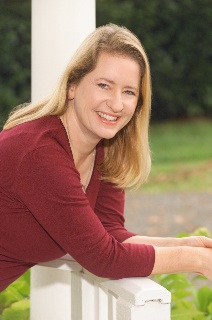
I’m a great collector of writing tips and techniques and I love to try different things. For Pearl the key to getting at the heart of that girl was not so much a particular technique but a willingness to spill great quantities of ink in getting to know her. I finished the first draft of this story when my oldest girl was in the third grade. That girl graduated from college this year! In many ways Written in Stone is the book that made me a writer. I’ve written more drafts of this one than any other. It was in third person initially.  I wrote several drafts in blank verse. I tried giving Pearl a more direct and contemporary voice, and an even more formalized storyteller’s voice than she has now. I think there is much to be gained, from rewriting a story many times from many different angles.

The heart of the matter, for me, came down to voice. I think Sherman Alexie does a great job of capturing a contemporary Native American voice. I think Graham Salisbury does excellent work with contemporary Hawaiian turn of phrase. When trying to write as I heard my Quinault and Makah neighbors speak, I couldn’t quite get the sound of the voice right. I was maybe 90% there but just as a violin a little bit out of tune is worse than one that’s miles out of key, I wasn’t willing to settle for almost right. So I gave the story a contemporary frame of a grandmother sharing her recollections with her granddaughter. This allowed me to use a slightly more formal tone and a storyteller’s turn of phrase, which suits my present talents better.

So that’s not very helpful in terms of concrete technique. How about this: if you love a story, don’t give up until you’re satisfied with it. :)
  
How do you find the ideas for your stories – which are quite varied? 

I was just talking to some students about this. Although my stories are quite different from each other, one thing they have in common is the coming-of-age theme. The thing that’s so exciting and also terrifying about being young is that the whole world is possible and its up to you to make choices that in the end will narrow your life considerably. So how do you know what your talents are and what you ought to do with your life because of those talents? That’s a great question to think about and I hope for families and students and teachers to talk about as they read the books.

I also think one of the great pleasures of fiction is that it takes you to someplace new and different every time. Heart of a Shepherd is set on a contemporary cattle and sheep ranch in Eastern Oregon one of the most starkly beautiful and empty places in the world. Second Fiddle is set in Berlin and Paris in 1990. I lived in Germany at that time, the fascinating and unsettled year when the Berlin Wall came down and the Soviet Union, the lifelong enemy of the Unites States, disappeared completely. It was a fascinating time to live abroad and great fun to revisit two of the most interesting and artistically vibrant capitols of Europe. Written in Stone is set in the only temperate rainforest in North America.  The Quinaults maintain the only stretch of wilderness beach on the west coast. Yes, it rains about 15 feet a year, but the Twilight books got this setting entirely wrong. It’s not dark or depressing on the Olympic Peninsula. After the morning mists roll away there are as many clear days as cloudy and there is nothing to compare with the abundance of the rainforest. I’ve got some pictures from the Olympic Peninsula over at my Pinterest page. Take a look for yourself. http://pinterest.com/rosanneparry/written-in-stone/

What are you working on now?


I am so excited about my newest project. It’s a series for younger readers and it has magic in it, both of which are new ground for me. The first book is called Jamie and the Dark. It’s a friendship story about a boy who makes friends with the Dark—a kid much like Jamie, but only a foot tall, who lives in the closet and has pockets full of stories. It has been such fun to write something funny and light-hearted that has a really interesting story-within-the-story element.

I also wrote a graphic novel script for the book, which was a fascinating process. I love thinking about a story in new ways and it was fun to think about the pacing of the story in a much more visual way.
I don’t have a publication date for Jamie and the Dark quite yet but I hope to have that all worked out sometime this fall.
  
Where can readers find out more about you and your books?

My website www.rosanneparry.com  is the place to go for information about author visits and lots more goodies like a recipe for each book. I’m also on Goodreads and you can follow me on Twitter @RosanneParry.

If you are lucky enough to live in Portland Oregon, I’ll be at A Children’s Place bookstore with Janet and 3 other MG and YA authors who also have books out this year set in the 1920s. We are going to have a Great Gatsby party and lots of lively conversation about historical fiction. That event will be Saturday September 14th at 2pm. I hope to see you there.

My other project for the fall is Wordstock, Portland’s book festival. I’ll be doing a writer’s workshop on Saturday October 5th at 3pm. My reading and book signing will follow that at 5:30pm, and I’ll be moderating a panel discussion on creating multicultural characters Sunday October 6th at 5pm. All the events are at the Oregon Convention Center.

Thanks Janet for sharing your blog space with me. I’m so looking forward to spending some time with you next month.

So am I!!


Monday, September 2, 2013

Scrivener and Me: A Love Story

As many of you know (if you’ve followed my blog or my work) I’m a pantser. An organic writer. Every time in the past that I’ve tried to create an outline I’ve felt it killed my work, and inhibited me from the freedom of discovery that I believe is a key element to my personal creative process.

No one could get me to plan a novel and, believe me, they tried.

Enter Scrivener. (Before I go any further, this is not an endorsement except of the most personal kind. Oh, and I’m a Mac user, and Scrivener was initially made for the Mac although there is now a PC version. But I can’t account for that one – so please sing out about it if you use it.)

But let’s take a step back, to the novel I’ve just finished as draft number 7.

This novel is a middle grade fantasy. The idea for it popped into my mind from the clear blue, and I wrote the first draft fast – so fast it was a blur. It’s a complex fantasy involving two points of view and two separate timelines that converge midway through the novel. When I was drafting, the POV was in fact omniscient with digressions into a closer third. I had multiple mini-chapters, and resorted to the old cut and scotch-tape in order to move one bit here and another there, to see if it made any better sense.

In other words, this document was a knotty, tangled mess.


It still has issues, and I only wish I’d discovered Scrivener before now.

I had just put this draft 7 aside for a rest when a new idea arrived (I love my muse - mwah!!). And I’d just finally bought myself a new computer, and while upgrading my software I thought, well, what about Scrivener? I’d had it for years and never tried it, so, what about it?

I decided that if I was ever going to play with new software why not at the beginning of a new project on a new computer, when I’m a bit in transition mode anyway.

Scrivener had eluded me in the past because it didn’t seem completely intuitive and easy, and I still think that’s true. But once I got started – even a little bit into it – I was hooked.
screen shot of the Literature and Latte site explaining Scrivener

Scrivener is like the ultimate virtual Trapper-Keeper. I do a ton of research for each of my books: I collect photographs and maps; I collect links within links; I draw and mind-map. All of these pieces of information can be stored within a single Scrivener document to be retrieved instantly while I’m working. No more closing one window to open another, no more logging on and off line to get back to something that I’m hoping I can find again, no more digging through that pile of print-outs to find the one picture or map or tidbit of information that I know is somewhere in there.

Furthermore, Scrivener’s corkboard tool is awesome. I have several whiteboards and corkboards – all awkwardly huge and cumbersome – and they were my mind-map places, with sticky notes or index cards that inevitably fell off or became jumbled. In Scrivener, I can create a virtual corkboard that goes wherever my computer goes. I can move and replace and add; I can annotate and highlight and transfer. I can color-code; I can change the size of the index cards so that more fit on my corkboard, or fewer. I can even use an outline feature – but, no, that will never happen.

One of my friends said that Scrivener is a program made for writers by writers. In other words, it’s the perfect left brain meets right brain tool.
screen shot of my corkboard


Here are several hints if you decide you want to try Scrivener.

  • 1.     Try it for free. The folks at Literature and Latte are really awesome and you can give it a test drive. And really, it’s not that expensive if you are willing to take a chance.
  • 2.     The written tutorials are good, but in my case my eyes glaze over with all that technical stuff. I just want to get on the road. So I watched the two introductory video tutorials, one short and one long (links in the Scrivener help menu), and they are terrific starters. I had to watch them twice but during the second run-through I had set up a practice manuscript, and I just paused the tutorial and practiced for a minute in the practice ms until I understood where to go and what to do.
  • 3.     Don’t make the mistake I did of filling in the template sheets without doing a save as first. I had to reconstruct the template sheets after I realized that mistake. (You don’t need the templates – but I thought they were rather nice.)
  • 4.     Figure out through practice how to toggle between the corkboard and your manuscript, and between showing the image and showing the synopsis in the sidebar. I thought I was going crazy – importing images that seemed to vanish – until I realized that they were waiting for me in the image mode.
  • 5.     Compiling seems to be one of the places people complain about. Compiling is transferring your manuscript to another platform, such as Word. I haven’t reached that stage; but I have copied and pasted a number of chapters of my new novel into Word without a single hitch or change in formatting (unlike what I’ve experienced in using Pages on my iPad, but don’t get me started on that.)


In essence, this confirmed pantser has become a kind-of plotter, thanks to Scrivener. The bottom line? I’m writing more words per day, more efficiently, and yet I’ve retained the creative flexibility that I cherish.


Now I need to go back to the fantasy and see if Scrivener will help me untangle those knots!

Tuesday, August 27, 2013

Uma Krishnaswami's THE PROBLEM WITH BEING SLIGHTLY HEROIC: Interview & Giveaway

Uma Krishnaswami is one of my favorite people, not to mention one of my favorite authors, not to mention a true talent, crafting delightful middle grade books. Like her newest - The Problem With Being Slightly Heroic, a sequel to her charming The Grand Plan to Fix Everything - rich with humor, cultural interest, and fabulous characters. (Full disclosure: Uma was my advisor at Vermont College of Fine Arts during my critical thesis semester, and she Made. It. Happen.)

At my urging (okay, I had to beg...okay, I had to promise the Chef my own grandmother's secret granache recipe) Uma was able to persuade the one and only Chef Armend Latifi (yes, people, "Cooking With the Stars" Chef Armend!) to join me on the blog for an interview.

But before we go too far, we do have a giveaway!! There's a giveaway copy of The Problem With Being Slightly Heroic (U.S. addresses, please), so check out the Rafflecopter at the bottom!

Now, here we go into the Chef's inner sanctum...

Chef Armend, please forgive the intrusion into your busy schedule. I hope you don’t mind my stepping into your kitchen to ask you a few questions.

WHO are you? Blogs? What is a blog? Never heard of you. Young lady, listen to me. If your business is not haute cuisine, I have no time for it.

Um—can we talk…[looks around for inspiration] pastry crust? [Steps inside the door]. Please. Pretty please?

Whatwhat? You’re interested in pastry crust? Why didn’t you say so? Sit. Here. Take a look at that. Fine, yes? Look at that surface, that texture! That is a divine crust, you hear, divine. It is a symphony made with flour and butter and a delicate sprinkling of sea salt. [Stands there for a moment, lost in admiration of his own handiwork].

[Interviewer happens to think her pastry crust is pretty darn good, thank you very much...um, sorry.] Chef, what is your opinion of rose petal milk shakes? Of rose petal chocolate cake? Of rose petals in general?

Rose petals? Rose petals? [Kisses his fingertips.] I am a connoisseur of rose petals. There are rumors flying around that I used to be allergic to them. [Mutters] That is all nonsense. You be sure and tell your readers—all fabrication and lies. I am a sensitive soul, that’s all, and roses are a vital part of my family history. As for rose petal chocolate cake, let me tell you that MY cake is to be entered in the next Great British Bake-off. They’re taking bets on it, I’m told—what do you think about that?

Most impressive, Chef. On another subject, how do you feel about your first meeting with Dolly Singh?

Whowhowho? Oh, Dolly. We have a good working relationship now, don’t get me wrong. But she—she’s a bit touchy. [Shudders.] All that jewelry she throws around. Touchy and unpredictable, and we will not even talk about that first meeting, nonoNO. [Slams hand down on counter, then shrugs.] Well what do you expect? From a movie star? Hey, they’re all like that. Try this dressing for my six-fruit compote. Is that a wondrous flavor? Tastetastetaste!

[Yum. Yumyumyum. Wipes lips.] I know you were very fond of your grandmother. Can you tell us a bit about her?

My Nona? My NONA! [Wipes eyes.] She was a SAINT. A saint, but could anyone win an argument with her? ANYONE? NO, I tell you, no. My Nona was the cleverest woman in the world and the bravest and the kindest, the sweetest, the best. She used to read poetry to me—about love, suffering, solitude, death. The thorns that plague all rose bushes. Beautiful, simply beautiful! Do you have a grandmother? DO you? Grandmothers. They are all saints!

[See intro re ganache, which recipe interviewer politely and slyly slides across the table...] Maybe you could give me some culinary advice. I have this recipe for chocolate-cucumber-mint….


Cucumber? Chocolate-cucumber-mint? [Shakes head violently.] In a word…NO! And now thank you very much but I have work to do, WORK! Unlike some people who spend their time writing in blogs. Ha! [Takes notes as interviewer leaves and can be heard murmuring]. Chocolate. Cucumber. Huh. Mint? Hmmm.

Want more from the Chef? I do!! Here you go:

Uma Krishnaswami is the author of several books for children, including the first story featuring Dini, Maddie, and Dolly, The Grand Plan to Fix Everything. She is also on the faculty of the Vermont College of Fine Arts MFA program in Writing for Children and Young Adults. Ms. Krishnaswami was born in New Delhi, India, and now lives in Aztec, New Mexico. To learn more, visit her website: http://www.umakrishnaswami.com/.


Follow all of the unforgettable characters from The Problem with Being Slightly Heroic on Uma Krishnaswami’s blog tour!

Mon, Aug 19
GreenBeanTeenQueen
Dini
Tues, Aug 20
There's a Book
Maddie
Wed, Aug 21
Once Upon a Story
Soli Dustup
Thurs, Aug 22
The Compulsive Reader
Dini's father
Fri, Aug 23
Sharpread
Chickoo Uncle
Sat, Aug 24
Booking Mama
review
Mon, Aug 26
Read Now, Sleep later
Mini
Tues, Aug 27
I Read Banned Books
Dolly
Wed, Aug 28
Through the Wardrobe
Chef Armend Latifi
Thurs, Aug 29
The Book Monsters
Ollie
Fri, Aug 30
The Brain Lair
Alana


Friday, August 23, 2013

Creating Little Videos

I've been taking Katie Davis's Video Idiot Boot Camp and learning a ton of fun stuff about making videos. The lessons are comprehensive and I've only begun to scratch the surface, but here's my first little creation, made through an awesome app called Powtoon:


The plan is I'll put it somewhere on my website, perhaps as part of a larger piece. Stay tuned!! (Or Tooned......)